
International Journal of Civil Infrastructure (IJCI)
ISSN: 2563-8084

Volume 8 - Year 2025- Pages 207-215
DOI: 10.11159/ijci.2025.021
Structural Maintenance Management and Related Influencing Factors on Railway Worker Crisis Awareness
Kei Matsumura, Yuichi Ito, Kouichi Takeya, Eiichi Sasaki
Institute of Science Tokyo, Department of Civil and Environmental Engineering
West 6th Building 4F 2-12-1-W6-7 Ookayama, Meguro-ku, Tokyo, Japan
matsumura.k.1844@m.isct.ac.jp; ito.y.ca@m.titech.ac.jp;
takeya.k.aa@m.titech.ac.jp; sasaki.e.ab@m.titech.ac.jp
Abstract - Legal frameworks for railway infrastructure management prescribe inspection intervals but often lack unified standards for inspection procedures. Consequently, railway operators develop and implement independent systems for structural maintenance and management, resulting in considerable variability among them. However, detailed information on these systems remains limited, making it difficult to evaluate how different approaches impact railway safety and influence crisis awareness of maintenance personnel. This study investigates the organisational structure of different Japanese railway operators involved in railway maintenance and management and examines how different operator characteristics, maintenance practices, and individual experience influence crisis awareness of personnel involved in structural maintenance. The findings suggest that direct experience is the most significant factor influencing crisis awareness of personnel, and that organizational structure and education play a crucial but secondary role. Although this research is based on Japanese case studies, the results offer relevant insight for other railway systems outside Japan that face similar challenges in infrastructure maintenance.
Keywords: Maintenance, Management, railway operators, Crisis awareness.
© Copyright 2025 Authors - This is an Open Access article published under the Creative Commons Attribution License terms. Unrestricted use, distribution, and reproduction in any medium are permitted, provided the original work is properly cited.
Date Received: 2025-04-10
Date Revised: 2025-09-30
Date Accepted: 2025-10-16
Date Published: 2025-12-05
1. Introduction
1.1. Background
The maintenance of railway tracks and structures follow general rules based on various, relevant laws and guidelines. However, there is often a lack of unified standards regarding inspection procedures, organizational structures and maintenance methods. As a result, railway operators independently establish and operate their own systems, leading to significant variability in maintenance practices and inspection quality.
Analysis into the cause of 62 train derailment accidents on Japanese regional railways show that "track-related factors"—referring to the maintenance condition of track and other ground facilities—account for approximately 43% of all accidents, making it the most common cause of railway accidents. In contrast, only 7% of 147 derailment accidents on railways managed by non-regional operators such as JR and major private railways were due to track-related causes demonstrating a huge discrepancy [1]. These findings suggest that derailment accidents due to track-related factors predominately occur on railways managed by specific operators and that maintenance quality has a significant impact on railway safety. Nonetheless, other studies have also shown that there is a growing need to improve the maintenance and management systems of all structures and not only the railway tracks managed by small and medium-sized railway operators [2].
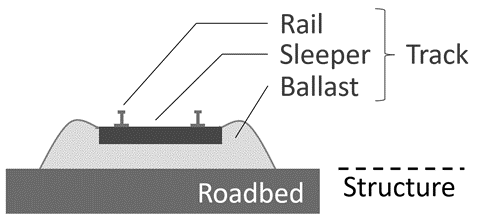
Furthermore, there is a lack of empirical studies that systematically compare these organizational structures of different operators, where even less is known about how their different structures influence the more psychological aspects of personnel involved in maintenance activities, including crisis awareness.
For some railway operators, especially for regional railways [3], the same department handles the management of both track and structures. As a result, there may be a greater focus on track-related issues, which could lead to a reduced awareness of structures. This highlights the need to better understand how maintenance system design and institutional culture influence individual awareness and organizational safety behaviour.
1.2.Aims
This study investigates the maintenance and management systems of railway structures in Japan, with particular focus on how organizational characteristics and individual experience affect crisis awareness among maintenance personnel. More specifically, the study aims to:
1) Identify structural differences in the maintenance systems of diverse railway operators.
2) Identify how differences in the characteristics of railway operators, structural maintenance systems, and individual experience influence crisis awareness of personnel.
In this study, a preliminary survey will be conducted to accurately assess the condition of tracks and structures, where questionnaires and interviews will be used to gather insight into inspector crisis awareness. Although focused on the Japanese railway sector, such as JR, third-sector railways and regional railways, this study aims to inform broader discussions on maintenance policy and human factor influence on infrastructure safety across various different national contexts.
2. Introduction into Japanese Railways
Japan's railway system faces increasing challenges due to aging infrastructure and natural disasters. For example, the average age of steel railway bridges now exceeds 70 years, indicating significant structural aging. While there have been no major accidents due to fatigue failure, fatigue cracks have been detected in some structures. Moreover, incidents caused by scour, sediment inflow, and derailments due to insufficient track maintenance occur frequently, highlighting the importance of proactive management and maintenance.
Japanese railway operators are broadly classified into three categories—JR, private railways, and third-sector railways—based on their operational structure. Comparing the three types of operators, this section explains the necessary information required for the analysis.
2.1. JR
Japan Railways (JR) was formed when the former Japanese National Railways (JNR) was dismantled and privatized. JR took over most JNR railway lines, and today, consists of six regional companies, such as JR East, JR Central and JR West, which operate passenger services.
2.2. Third-sector Railways
Third-sector railways are corporations established as private enterprises under local governments. In general, third-sector railway operators often face financial difficulties [4], as they cover routes that were designated and approved by the former JNR as "specified local lines" and have low number of passengers.
2.3. Private Railways
Private railways refer to all other railway lines that are not operated by JR or third-sector railways. They range from major private railway companies to small and medium-sized regional private railways.
In general, the term "regional railways" refers to both third-sector railways and small to medium-sized private railway companies. 71 out of 96 regional railway companies reported a deficit in 2016, highlighting the challenging situation of regional railways [5]. However, in this study, the term "regional railways" is used to refer only to small and medium-sized private railway companies, in order to distinguish them from third-sector railways, which have different establishment backgrounds.
3. Investigation Methods
3.1. Investigation Subjects
A preliminary survey was used to investigate different employee characteristics across railway operators. The target participants were from JR, third-sector railways, and regional railway companies. Since it is likely that the maintenance and management systems among different operators of JR have changed following privatization, individuals from different JR operators were selected as targets for the survey. In total, two operators from JR, two operators from third-sector railways, and three operators from regional railways were selected for this survey. As one JR operator and two third-sector railways declined to participate, the final participants in the questionnaire and interview process consisted of one JR operator and three regional railway companies. Table 1 shows the list of target railway operators that took part in the questionnaire and interview.
3.2. Preliminary Survey
To investigate the railway characteristics including both track and structure conditions, literature surveys, satellite imagery using Google Maps for bridge location identification, on-train monitoring and field investigations were carried out. Table 2 shows the categories and items considered in the preliminary survey. Table 3 provides details of onboard vibration measurement using an accelerometer to examine track conditions.
Table 1. Survey target railway operators
|
|
Length (km) |
Man for maintenance |
|
JR (A) |
1970.8 |
|
|
Regional A |
57.5 |
Track (T): 1, Structure (S): 1, T+S:1 |
|
Regional B |
59.8 |
T+S: 13 |
|
Regional C |
2.0 |
T+S: 3 |
Table 2. Survey items (preliminary survey)
|
Category |
Item |
|
Characteristics of line |
・Mountain routes/flat routes ・Cross-river presence/absence |
|
Track condition |
・Type of sleeper ・Condition of the roadbed ・Shaking (vibration acceleration) |
|
Structure characteristics |
・Size of steel bridge ・Type of steel bridge ・Age of steel bridge |
|
Structure condition |
・Condition of the steel bridge |
3.3. Questionnaire and Interview
A combination of questionnaires and interview were conducted to determine details surrounding organizational structure and their inspection systems. Table 4 shows the categories and items for the questionnaire and interview. This survey was also designed to examine the awareness of maintenance personnel, and the results summarized in Chapter 5 were derived from this investigation.
Questionnaires were prepared for organizations and individuals engaged in track or/and structure maintenance. Interviews were only conducted one-to-one and in person with two or three people from each organization.
Table 5 and Table 6 lists all participants from each target railway operator.
4.Investigation Result
4.1. Preliminary Survey
- Track Conditions
Table 3. Monitoring with Accelerometer
|
Measurement Devices |
Wireless Sensor Logger:sonas x02 Accelerometer:EPSON M-A352 GPS Device:COLORADO 300 |
|
Sampling Rate |
Acceleration:200 Hz GPS: 0.5Hz |
|
Target Railway Lines |
Lines subject to questionnaires and interviews |
Table 4. Survey items (questionnaire and interview)
|
Category |
Item |
|
Organizational Structure |
・Business System of the Operator ・Number of persons engaged in track and structures ・Presence/absence of specific section in structure |
|
Inspection System |
・Flow of inspections ・Organization in charge of inspections (direct or outsourced) ・Specialization of the organization in charge of inspections ・How to manage the records |
|
Education |
・Education system |
|
Budget |
・Budget constraints |
|
Consultation |
・Consultation with other operators |
Table 5. Survey target persons in JR (A)
|
|
Section A (Structure technical center) |
Section B (S) |
Section C (T) |
Section D (T) |
||||||||
|
Specialization |
S |
S |
S |
S |
S |
S |
T |
T |
T |
T |
T |
T |
|
Duration of experience |
T: 1 year |
T: 5 years |
T: 1 year (36 years old) |
T: 1 year |
T: 1 year |
S: (35 years old) |
T: 6 years |
T: (39 years old) |
T: (47 years old) |
T: 10 years |
T: 20 years |
T: 24 years |
Table 6. Survey target persons from regional railways
|
|
Regional A |
Regional B |
Regional C |
|||
|
Specialization |
S |
T |
T+S |
T+S |
T+S |
T+S |
|
Duration of experience |
S: (at least 18 years) |
T: (at least 29 years) |
T+S: 15 years |
T+S: 23 years |
T+S: 1 year |
T+S: 4 years |
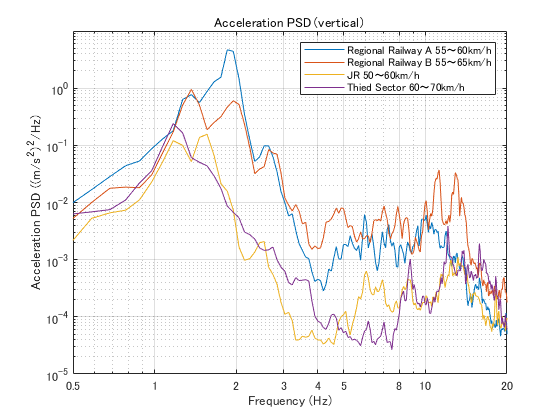
An accelerometer was installed on each commercially operated train to measure acceleration. Measurements were conducted on four lines: two regional railways, one JR operator, and one third-sector railway. To ensure consistent conditions where possible, measurements were conducted on flat and straight track sections composed of unit length rails, at a speed of approximately 60 km/h. The vibration acceleration measurements taken from a railway car indicate that regional railways exhibit greater shaking, than JR and third-sector railways derived from JNR (Figure 2). The main factors considered likely for this difference include the vibration at the time of passing through a track joint and the magnitude of track displacement. Maintenance practices inherited from JNR likely contribute to differences in track maintenance conditions.
For JR (A) and Regional C, the replacement of wooden sleepers with prestressed concrete (PC) sleepers has significantly progressed. In contrast, for Regional A and B, the use of PC sleepers remains limited, with replacement taking place for only one out of every three wooden sleepers in certain sections. This discrepancy appears to be due to differences in financial capacity. While all railway operators are actively working to improve their track structures, the extent of their efforts is greatly influenced by the funding available to them.
Through the interviews conducted, it was made apparent that railway operators that have experienced derailments in the past are prioritizing track upgrades, with some operators undertaking complete replacement of ballast and sleepers.
- Condition of bridges
The history of steel bridge replacement, repair and reinforcement, including whether the action was suitable or not, and management conditions including paint condition, missing hook bolts and floating anchor bolts have been investigated in this survey and revealed the following:
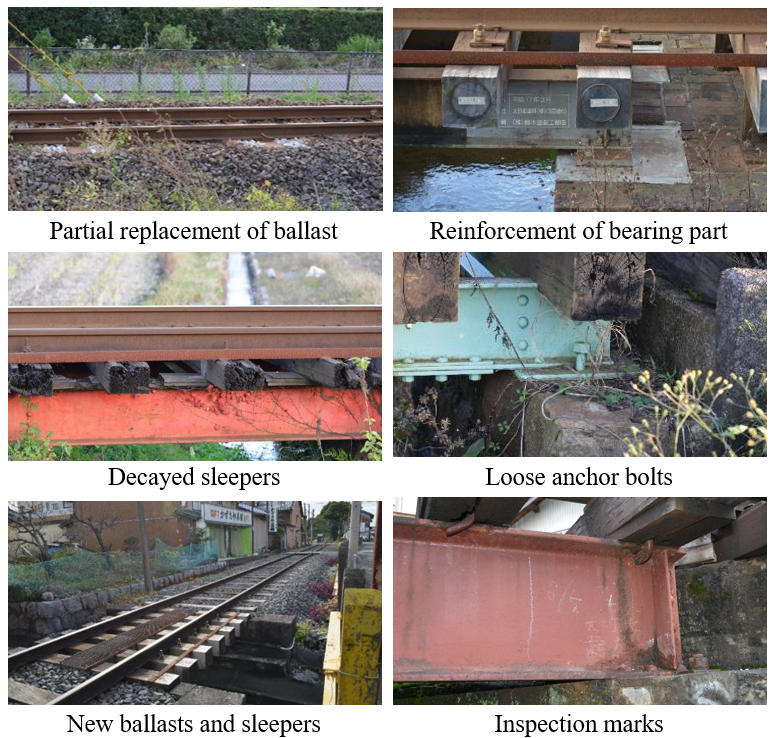
(Upper: Regional A, Middle: Regional B, Lower: Regional C)
1) Poor paint condition across all bridges (including JR)
2) Poor management conditions and methods for repair/reinforcement of bridges within certain operators
- Relationship between track and bridges condition
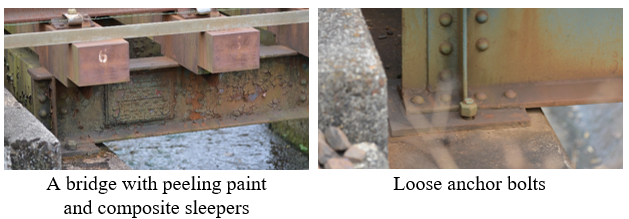
In addition to evaluating the track and steel bridge condition, obtained from a) and b), the types of maintenance activities that operators invested in, such as track renewal and structure repainting have been evaluated. In the case of JR (A), the tracks were in good condition due to sufficient funding and investment, whereas the bridges shown in Figure 3 exhibit issues concerning painting and loosened anchor bolts. Figure 4 shows the condition of one regional railway track and structure. It should be noted that these figures do not represent the overall maintenance quality of each operator. While most operators demonstrated a mix of well-maintained and problematic track and structures, JR (A) was the only operator where all tracks were consistently well-maintained. For all railway operators, investment has primarily been made into tracks, resulting in structural elements being left in relatively poor conditions. No clear relationship was found to exist between the track and structure conditions across operators.
4.2. Inspection systems
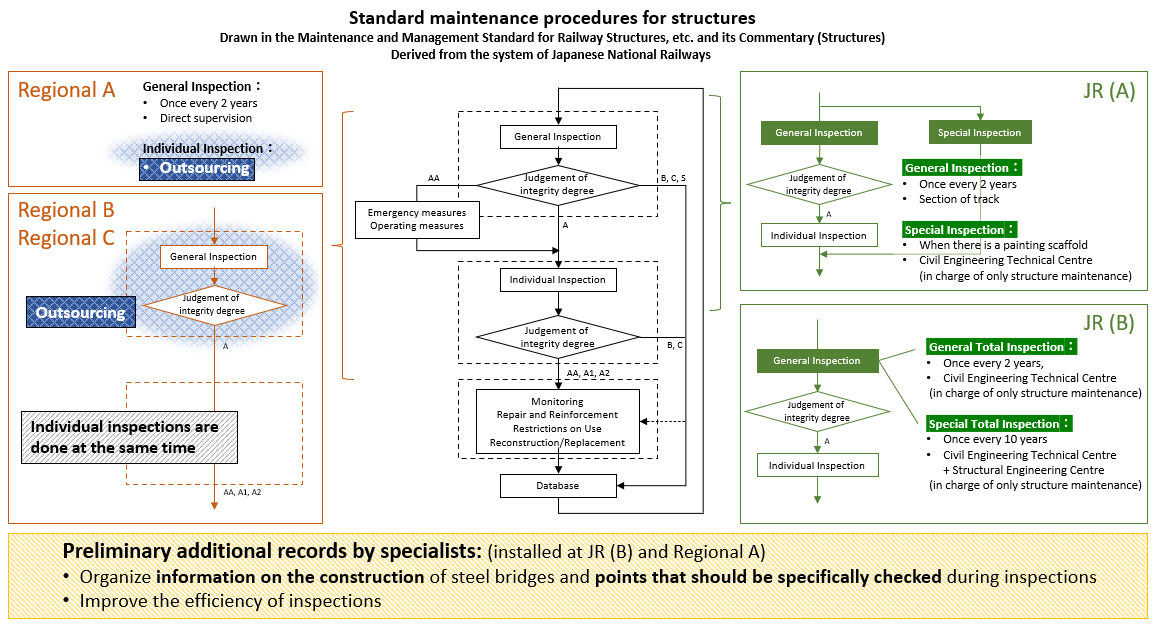
Bridge inspection systems used by five different railway operators are shown in Figure 5. The central process outlined in this figure shows the standard inspection system used for structures, following Japan’s maintenance standards. Inspection systems differ by operator where the difference can be classified into four categories even in this survey.
- Outsourcing / Direct supervision
JR (A) conducted all inspections using their own personnel, whereas all other regional railways in this study hired a subcontractor to conduct inspections.
- Combined individual inspection
Operators who hire a subcontractor tend to conduct general and individual inspections at the same time. Individual inspection is the detailed examination of a deformation considered serious during a general inspection.
- Special (additional) inspection
JR (A) conducts special inspections for bridges when inspectors in charge of only structural inspection conduct repainting. General inspections by JR (A) focus on confirming past deformities. General inspection is carried out by the structural department whose duties not only involve inspection but also cover many other tasks. JR (B) also conduct special total inspections during their general inspection once every 10 years. JR (B) divides check items for bridge maintenance into items A and B depending on how often deformation occurs. During the general total inspections conducted once every two years, only items from items A are checked. All inspections conducted by JR (B) are performed by inspectors who are in charge of only structural maintenance.
- Preliminary additional records by specialist
JR (B) and Regional A introduced bridge records made by bridge specialists to help identify required checkpoints in each bridge and consequently improved inspection efficiency.
5. Crisis Awareness Factors
5.1. Experience
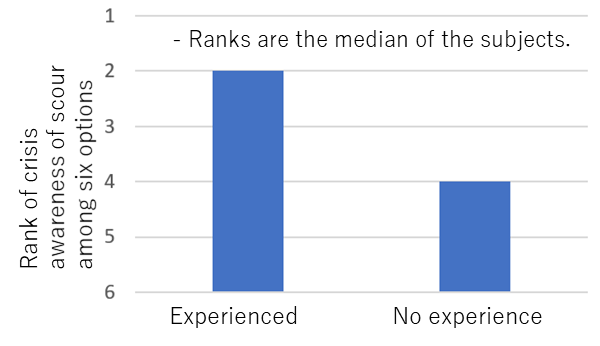
An illustrative example of how direct experience influences crisis awareness can be seen in the case of bridge spills and scour. The study found that organizations that experienced bridge spills and scour, tended to rank bridge spills and scour higher on the list of structural hazards. On the other hand, operators with no such direct experience were found to give this concern a lower ranking. Figure 6 shows how individuals with experience in scour tend to rank bridge spills and scour higher on their list of structural concerns.
5.2. Organization form
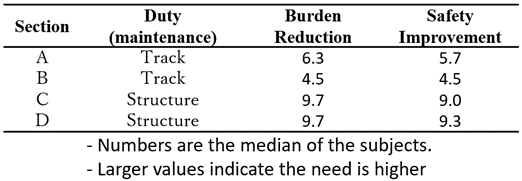
Table 7 shows the results of a questionnaire investigating the magnitude of need rated on a scale between 1 and10 by JR (A) subjects. The findings show that those in charge of structures were more aware of the need to reduce the burden and improve the safety of steel bridge maintenance and management than those in charge of track maintenance, by a wide margin. Staff in charge of structures seemed to have a strong sense of crisis because they have previously seen many deformations of steel bridges. This is supported by the fact that when track maintenance workers and structural maintenance workers were asked if they could think of any bridges for which they were particularly fearful of deformation occurring, most structural maintenance workers said "yes". Conversely, many of the track maintenance workers answered "I am not sure" to this question. These differences in awareness occur due to their different duties and experience, which are largely the result of how an organization is built.
5.3. Education
Even though some regional railway personnel had never seen fatigue cracks, they ranked fatigue cracking high on their list of concerns. They mentioned having a strong concern for fatigue cracks following textbook examples. This highlights the importance and impact of education.
One of the JR workers also shared his experience, saying, "When I was relearning about fatigue cracking, I came to understand that cracks can propagate suddenly."
5.4. Strength and investment in railway facilities
JR (A) conducts track maintenance work to improve the quality of travel, with safety as a prerequisite. Regional railways, on the other hand, cannot afford the time or money required to perform such work, so they exclude any consideration into travel quality.
One concern found in the survey was the nuance of the phrase by some inspectors in JR (A), "I guess we'll be fine.” None of the track maintenance workers in JR (A) considered derailments due to track deviations in the track section for which they were responsible. Investments have improved safety. Therefore, it is possible that these personnel have been performing their duties without having any direct experience related to safety that could have influenced their crisis awareness.
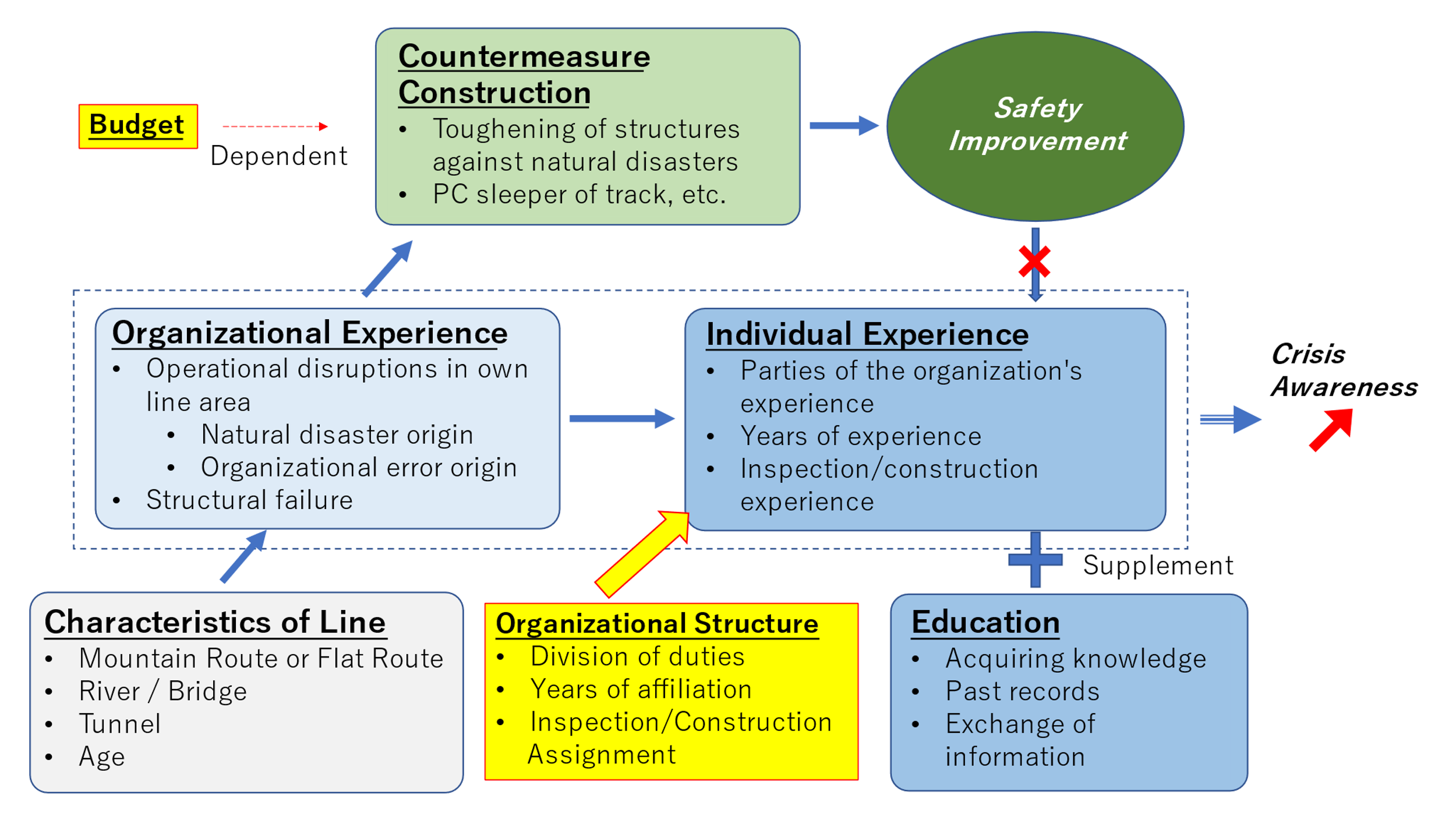
Based on the above findings, individual experience—including the depth of experience influence by organizational structure— can be seen to have significant impact on crisis awareness and that education is of secondary importance. In addition, the findings suggest that making greater investment into reducing the likelihood for accidents will increase safety but that this could in turn lead to lower crisis awareness. The flow of how crisis awareness forms is summarized in Figure 7.
6. Conclusion
This study examined how maintenance and management systems differ among Japanese railway operators. The analysis focused on how the difference influences the crisis awareness of personnel involved in structural maintenance. Through conducting interviews, questionnaires, and field investigations, several key findings were found as follows.
1) Patterns in the maintenance systems
The structure and operation of railway maintenance varies among each operator. In particular, there was a large discrepancy between whether a dedicated structural maintenance team existed or not. Operators that have established specialized teams responsible for structural maintenance tended to assign clearer roles and responsibilities to each of their personnel. Such organizational design naturally promotes each personnel to acquire specialized knowledge and a sense of crisis awareness.
Conversely, in operators where maintenance responsibilities are much broader, and personnel are often engaged in a wider range of tasks, each personnel had limited opportunity to acquire in depth knowledge of any one given area. Namely, by increasing one’s duties, awareness into infrastructure-related hazards reduces.
These findings highlight that organizational structure plays a fundamental role in cultivating expertise and fostering a culture where personnel are prepared for risk.
2) Influence into crisis awareness
The second aspect examined in this study is how crisis awareness forms among railway maintenance personnel, especially considering risks associated with structural failures. Based on interview and survey data, it was found that direct field experience significantly influences crisis awareness. Personnel who have directly encountered critical infrastructure issues, such as bridge scour or fatigue-induced cracks, demonstrated a significantly higher level of crisis awareness than those without such experience.
However, not all maintenance personnel have the opportunity to gain such experience. Taking this into consideration, adequate education proves critical for increasing awareness and bridging any gap between personnel experience. Educational programs that emphasize real-world case studies and explain structural hazards can more effectively simulate the insight one obtains from direct experience and instill a sense of urgency, even among relatively inexperienced workers.
Based on these findings, several practical recommendations can be made. To enhance crisis awareness and strengthen the maintenance culture, railway operators should adopt a multifaceted approach to personnel development and knowledge transfer.
First, in-house education and training programs should be enhanced to provide personnel with realistic and practical learning opportunities. For instance, incorporating VR or AR technologies can help simulate rare but critical situations—such as structural failures or emergency responses—in a safe and controlled environment, thereby deepening workers’ understanding of potential hazards.
Second, mechanisms for effective knowledge succession should be reinforced. This includes assigning experienced engineers long-term to specific service lines where they can accumulate area-specific expertise and mentor younger staff through hands-on guidance. At the same time, systematically compiling and utilizing records of past accidents and maintenance failures can help preserve institutional memory and enable personnel to learn from previous incidents. Together, these measures ensure that valuable practical knowledge is not lost across generations of maintenance workers.
Finally, sharing accident information and root-cause analyses—both within organizations and across different railway operators—can further elevate collective crisis awareness across the industry. Collaborative learning from shared experiences can play a vital role in preventing similar incidents in the future.
This study has certain limitations. The analysis was based on a relatively small sample of operators and personnel, which may limit the generalizability of the results. Future research should expand the dataset to include a wider range of railway operators, regions, and maintenance roles to test the robustness of these findings. Longitudinal studies could also help clarify how crisis awareness evolves over time as organizational practices and educational interventions change.
In conclusion, combining first-hand experience, formal education, and improving organizational structures to encourage more direct and consistent exposure to real life structural issues, will help create a more resilient overall maintenance culture. Such consideration is particularly important in contexts like Japan, where maintenance responsibility is highly operator dependent. Nonetheless, the implications of these findings remain relevant for other countries with similar infrastructure governance systems.
References
[1] Japan Transport Safety Board, “Measures to Prevent Accidents on Regional Railways,” Transport Safety Board Digest, no. 43, Sep. 26, 2023.
[2] Special Committee on Infrastructure Maintenance (Railways) of the Chairman for the 2022 Fiscal Year, Health Assessment of Rail Infrastructure and Recommendations for Future Maintenance. 2020.
[3] N. Kato and K. Ozawa, “Current status and issues of civil structure maintenance for regional railway operators,” in Proc. 33rd Annu. Conf. Construction Management Issues, 2015.
[4] K. Sakamoto and T. Ono, “Management strategies and marketing of local railways: A case study of Nagaragawa Railway,” Rōkaru tetsudō no keiei senryaku to māketingu: Nagaragawatezudō o jirei ni shite, 2020.
[5] I. Nasuno, “Current status and issues of the local railways,” Nihon Chiiki Seisaku Kenkyū, no. 22, pp. 68–76, Mar. 2019.